




South Sudan is entering a critical political period—one defined not only by lingering challenges from the past, but also by the potential for a new political culture built on accountability, humility, and a genuine commitment to citizen-centred leadership. As conversations about the country’s political future intensify in the lead-up to 2026, one reality is becoming increasingly clear: no political organization can lead South Sudan into a meaningful new chapter without building a broad-based national movement.
Such a movement must resonate deeply with the country’s youth, who represent both the largest demographic and the heartbeat of the nation’s aspirations. The next phase of South Sudan’s political development depends on inspiring and mobilizing this group—both the educated and those without formal schooling—whose hopes and frustrations will shape the trajectory of the country.
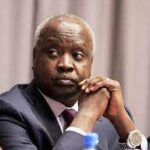
In this landscape, the South Sudan Salvation Movement (SSSM), under the leadership of Hon. Nhial Deng Nhial, carries a unique advantage. Unlike older political parties that are weighed down by internal divisions, historical baggage, and entrenched patronage networks, SSSM arrives without the burden of legacy political debts. It is not trapped in old rivalries nor shaped by long-standing factionalism.
This gives it the space to present itself not simply as another political competitor, but as a genuine alternative—a fresh political home for South Sudanese citizens who are longing for reform, principled leadership, and a national vision rooted in integrity. For many citizens, the emergence of a party grounded in discipline and forward-looking values is in itself an invitation to rethink what political leadership can be.
To transform this potential into real momentum, SSSM must start by understanding what South Sudan’s youth have been consistently calling for—respect, opportunities, transparency, and inclusion. Young people, whether in universities, cattle camps, markets, boda-boda stations, rural villages, or diaspora communities, are not motivated by empty slogans. They are drawn to political projects that treat them as partners in shaping the country’s future. When a party genuinely recognizes their dignity and potential, individuals naturally drift toward it—not because they are commanded to leave their former political homes, but because they see a vision that aligns with their hopes and resolves their frustrations. That is how real political re-alignment begins.
A strong movement must first establish a clear and compelling identity. For SSSM, this means defining itself not by attacking other parties but by offering a concrete, values-driven contrast. Its identity should reflect a commitment to ethical politics, a serious and realistic agenda for economic renewal, and a deep respect for institutional discipline. It must demonstrate a willingness to learn from past governance mistakes and offer credible solutions for peace-building and state formation. When a party shows that it has a moral backbone and strategic clarity, people—especially the youth who have grown weary of recycled political narratives—begin to see it as a trustworthy vehicle for national transformation.
Equally important is the creation of a political culture rooted in openness and accessibility. One of the persistent weaknesses of established political parties in South Sudan is the perception that they are distant, closed, or dominated by a narrow elite. Decision-making often remains centralized and disconnected from ordinary citizens. SSSM has the opportunity to do things differently by decentralizing political conversations, hosting open community forums, and encouraging dialogue without intimidation. A movement becomes strong when people feel they can walk into it freely, speak honestly, and be heard without fear or hierarchy. When leadership listens more than it talks, trust begins to build from the ground up.
Youth empowerment is another crucial pillar. Young people do not join political parties because they are flattered with promises about being the “leaders of tomorrow.” They join when they can influence decisions today. SSSM can distinguish itself by building transparent youth structures that are open to all—not just the educated elite but also traders, drivers, farmers, returnees, and rural youth who have been historically excluded. Creating mentorship channels between senior leaders and emerging young voices, valuing practical skills alongside academic qualifications, and ensuring that youth have genuine decision-making power can create a sense of ownership. When young people feel that a party truly belongs to them, they defend it with unmatched energy.
If SSSM is to attract citizens from SPLM, SPLM-IO, and other parties, it must present itself as a practical alternative to existing political systems. Many young people in established parties struggle with limited mobility, internal political bottlenecks, inconsistent opportunities, and cycles of instability. Offering a different model—one grounded in transparent leadership, policy-oriented decision-making, and clear boundaries between personal interest and national responsibility—can appeal to individuals who are seeking a more constructive political home. When a new party demonstrates good conduct, the contrast speaks louder than any criticism.
None of this can be achieved without a grounded presence in communities. Mobilization is not built through posters, rallies, or well-designed speeches; it is built through consistency. When a party is present in people’s lives—through community service activities, outreach programs, engagement with traditional leaders, collaborations with youth and women’s groups, and constant interaction with local networks—it becomes part of the social fabric. South Sudanese communities value leaders and organizations that show up in times of need, not just during political seasons. A party that serves becomes a party that grows.
Above all, SSSM must articulate a message anchored in hope, discipline, and national reconciliation. South Sudanese across political, ethnic, and generational divides desire a country that can move from trauma to stability. A party that offers a credible path toward unity, fairness, and institutional healing has the potential to draw widespread support. The central message should emphasize healing over hostility, honesty over political gamesmanship, competence over disorganization, and national vision over personal ambition. These are the values that inspire confidence and draw citizens toward a movement that feels inclusive and forward-looking.
If SSSM embraces these core principles—clarity of identity, openness, genuine youth empowerment, integrity, grounded community presence, and a unifying national message—it will not need to pressure anyone to join. People will naturally gravitate toward a political home that mirrors their values and ambitions. South Sudan’s youth are not searching for unrealistic promises; they are searching for seriousness, sincerity, and opportunity. When a political organization embodies these principles, individuals from all backgrounds and previous affiliations begin to reorient themselves with conviction.
In this moment, the South Sudan Salvation Movement has the opportunity to evolve from a newly established party into a broad, youth-driven national movement. With disciplined organization, strong values, and a message rooted in national renewal, it can position itself as a credible alternative capable of contributing meaningfully to the country’s political future—2026 and beyond.